Contact Information
Email: sonnensc@umbc.edu
Office: Math / Psychology 317
Phone: 410-455-2361
Fax: 410-455-1055
Lab: Sondheim 502
Lab Phone: 410-455-3180
Website: Children and Families, Schooling, & Development Lab
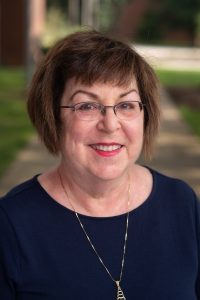
Professor
Education
Ph.D., Developmental Psychology — State University of New York at Stony Brook
Area of Study
Educational/Cognitive Development of Children from Different SES and Ethnicities.
Courses Taught
- Advanced Child Development (PSYC 407)
- Development and Education (PSYC 409)
- Cognitive Development (PSYC 651)
- Child Assessment (PSYC 721)

Learn more about Dr. Sonnenschein’s Research Interests Video and her research interests in this short video.
Research Interests
Dr. Sonnenschein’s research addresses ways to promote the academic success of children from diverse (race/ethnicity, SES, linguistic) backgrounds. Although the research considers home and school factors, she is particularly interested in how parental beliefs and practices are associated with children’s academic development.
Graduate Research and Training Opportunities
No, not accepting graduate students for Fall 2027.
Undergraduate Research and Training Opportunities
Yes: Undergraduate opportunities available.
Undergraduates can assist with all phases of the research, including coding and analyzing data, library research, interviewing parents/children, assessing children’s competencies. Contact: sonnensc@umbc.edu
Graduate Program Affiliation(s)
Applied Developmental Psychology
Selected Publications
- Elementary school children’s home learning environments: Mathematics, reading, science, written language. Sonnenschein, S., Gursoy, H., & Stites, M. (2022). Education Sciences, 11, 303-318.
- Facilitating preschool children’s mathematics development in China, Japan, and the United States: Is the classroom library considered? Stites, M.L., Sonnenschein, S., Chen, Y., Imai-Matsumura, K., & Gürsoy, H. (2021). Education Sciences, 11, 792.
- Home learning environments for young children in the U.S. during COVID-19. Sonnenschein, S., Stites, M.L., & Ross, M. (2021). Early and Education Development, 32(6), 794-811.
- School readiness beliefs of Dominican and Salvadoran immigrant parents. Simons, C., Sonnenschein, S., Sawyer, B., Kong, P., & Brock, A. (2022). Early Education and Development, 33(2),269-290.
- Dominican, Salvadoran, and Chinese immigrant parents’ reasoning about school readiness skills. Sawyer, B., Dever, B., Kong, P., Sonnenschein, S., Simons, C.,Yu, X., Zhang, X., Cai, Y. (2021). Child & Youth Care Forum, 51, 137-159.
- A case study of a school-university partnership focused on literacy and educational equity: Responding to COVID 19 in the early grades. Galindo, C., Sonnenschein, S., & Sanders, M. (2021). School-University Partnerships, 14(3), 17-42.
- Learning at home: What preschool parents do and what they want to learn from their children’s teachers. Sonnenschein, S., Stites, M., & Dowling, R. (2021). Journal of Early Childhood Research, 19(3), 309-322.
- Mathematics learning opportunities in preschool: Where does the classroom library fit in? Stites, M., Sonnenschein, S., Dowling, R., & Gay, B. (2021). Special issue of Early Education and Development, 32 (1), 66-81.
- Poverty, parent involvement, and children’s reading skills: Testing the compensatory effect of the amount of classroom reading instruction. Gay, B., Sonnenschein, S., Baker, L., & Sun, S. (2020). Early Education and Development, 32(7), 981-993.
- Latina mothers’ engagement in children’s math learning in the early school years: Conceptions of math and socialization practices. Galindo, C.,Sonnenschein, S., & Montoya-Avila, A. (2019). Early Childhood Research Quarterly ,47, 271-283.
- The relative importance of English vs. Spanish language skills for low oncome Latino English language learners’ early language and literacy development. Sonnenschein, S., Metzger, S.R., Dowling, R., & Baker, L. (2017). Early Child Development and Care, 187 (3-4), 727-743. DOI: 10.1080/03004430.2016.1219854 (reprinted in: R. Evans, & O. N. Saracho (Eds). (2018) Research in Young Children’s Literacy and Language Development (pp.429-445). NY: Routledge, ISBN: 978-1-138-09109-2
- Extending an effective classroom-based math board game intervention to preschoolers’ homes. Sonnenschein, S., Metzger, S.R., Dowling, R., Gay, B., & Simons, C.L., (2016). Journal of Applied Research on Children, 7(2), 1-29.
- Low-income parents’ socialization of their preschoolers’ early reading and math skills. Sonnenschein, S., Metzger, S.R., & Thompson, J.A. (2016). Research in Human Development, 13, 207-224.dx.doi.org/10.1080/15427609.2016.1194707
- Decreasing the SES math achievement gap: Initial math proficiency and home learning environments. Galindo, C., & Sonnenschein, S. (2015). Contemporary Educational Psychology, 43, 25-38. Galindo & Sonnenschein, 2015 CEP
- Race/ethnicity and initial math skills: Relations between home, classroom, and math achievement. Sonnenschein, S., & Galindo, C. (2015). The Journal of Educational Research, 108, 261-277.
CV
Susan Sonnenschein CV – Last Updated January 2025